A Battle for Prosperity - An ICAA/OSB Conference
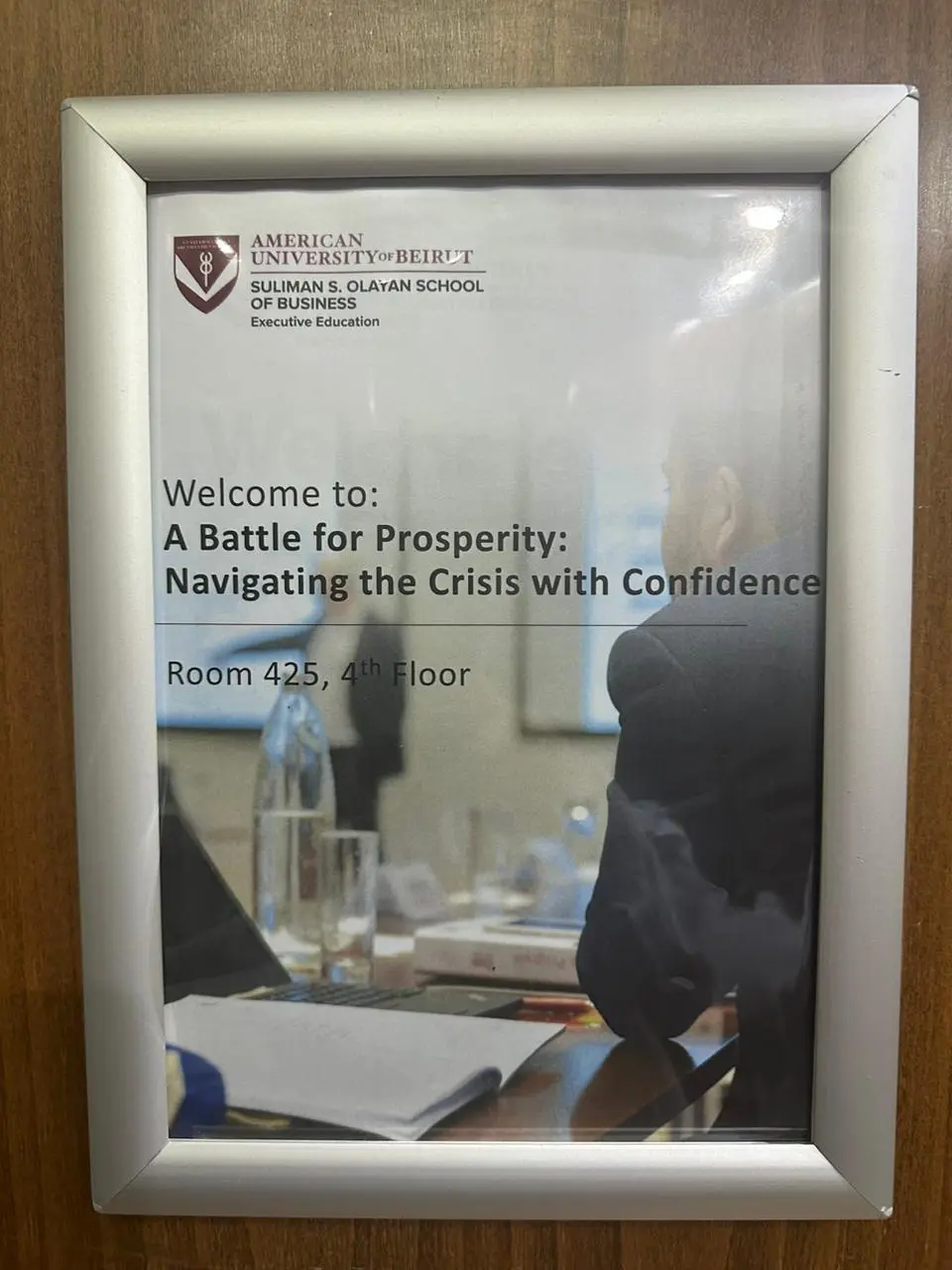
The ICAA in collaboration with the OSB conducted a conference last Saturday the 18th of March titled “A Battle for Prosperity: Navigating the Crisis with Confidence”. This conference comes at a time of much economic and political turmoil in Lebanon. Karim Noueihed opened the conference insisting that despite the grim picture we see, there will always be room for optimism and a dream of a brighter future. He continued by saying that it is the IC Culture to always dream and work towards a brighter and prosperous future in the face of any storm.
The first speaker to take the podium was Mr. Walid Assaf - Chairman & CEO of SMLC, the Pepsi Cola Franchisee in Lebanon - who walked the attendees on the evolution of his company through the many crises that hit Lebanon since 1952 but continues to believe in the potential of the country. He calls for investment in the productive sectors in Lebanon like agriculture, industry, and tourism, all of which have withstood many shocks and still stood through. He continues to assert that there will be no growth without a functioning banking sector and the economy will be destroyed in a cash economy.
The second speaker was Dr. Yusuf Sidani the dean of OSB who explained the challenges of the OSB in navigating the crisis and how they were able to get out of it with the least damage. The recent Lebanese crisis that is less temporary and more deep than ever anticipated. His major takeaway from his experience is firstly to be honest and transparent with all stakeholders to engage them in the process of survival; and the second takeaway is to always listen to your stakeholders and never lose sight of the big picture while fire fighting the many resulting issues. Dr Sidani concludes by saying that “ Leaders are Dealers in Hope” and that resonates loudly today more than any other time.
After the break, the first panel moderated by Dr. Bassem Bawwab began with three panelists, Mrs. May Makhzoumi, Mr. Bijan Azad, and Mr. Karim Baalbaki. While all three panelists confirm that the changing environment and the ensuing financial crisis that has taken a great toll on their operations and presented great challenges. Mrs Makhzoumi faced a challenge to retain fairness in compensation between foreign and local employees after the collapse of the value of their enumerations in comparison. Karim’s account revolved around the story of his family and the realization that living and working n this part of the world is working and living in permanent crisis. Karim believes that it is time for us to rewire our thinking to accommodate this fact and it is now an opportune time to put the interest of the many over the interest of the one. Karim went on to praise the owner-manager model in this part of the world as it allows businesses to continuously reinvent themselves in turbulent times but with a warning to never lose sight of the larger picture. Mr. Azad, being the head of the Darwazah Institute at OSB, revealed that the OSB has been very active in recent years in developing and nurturing startups by giving entrepreneurs the necessary tools to develop their visions. The OSB is particularly active in developing exportable businesses and is now reactivating the departments across AUB that enable companies in Lebanon to achieve exportability by issuing licenses and accredited certifications as to quality, content, and traceability.
The second panel included Ms. Yusr Sabra and Mr. Patrick Fitzgerald and Mr. Yasser Akkaoui. Yusr walked the audience through her journey to develop her company “Wakilni” and explained the challenges it faced. Yusr recounted that at times of crisis she and her team were able to take the advantage, for during the beginning of the financial crisis she was able to convince investors that wanted to exit the banking system to invest in her business and was able to land a significant influx of investment that she used to pre-purchase services for an extended time before the situation turned worse. Yusr also took advantage of the COVID-19 crisis that quite dramatically tripled the volume and that was an opportunity to develop the systems and the procedures that make her business scalable and exportable today. Mr Fitzgerald took the stage to explain the programs and initiatives that the OSB are taking to accommodate to the changing environment and the ending crises noting that he himself decided to come back to Lebanon in the midst of the turmoil and when asked about his reasons, he stated that Lebanon though small in land mass, is huge in its potential and has tremendous opportunities to flourish but only with real will and dedication from all its stakeholders. He sees this opportunity and wanted to be a part of it. As the Chairman of Capital Concept and the ESG & Sustainable Finance Consultants in Lebanon, Yasser explained the essence & essential need of ESG- Environmental & Social Governance. He stressed on the fact that for any establishment to survive long term, and especially in times of conflict, it needs to reassess its presence by identifying its Purpose of existence rather than the traditional “mission, vision” corporate identification.
Dr. Samer Doughan had a brief intervention just after lunch and introduced the current recipients of the ICAA award for 2022. ICAA is now supporting 14 students with their university tuition and aims to support even more students especially in these turbulent time.
The last panel of the conference received Dr. Marwan Barakat who was assisted by Saad Jamaleddine. Dr Barakat illustrated the Lebanese financial crisis with data and figures and explained the prospects for Lebanon in the near and medium term. He also illustrated the need for political and economic reforms and highlighted the projected repercussions in the event of no reforms. The audience interacted with Dr. Barakat transparently and openly as this was a topic very close to their daily struggles.
The conference came to a close and certificates were distributed to the attendees. The ICAA is committed to having this series of lectures and conferences on a yearly basis and will begin a process early on to develop the programs to be in line with the times and the needs of the community.